

Plinko 3 Rewiew
By Dr. Mark Griffiths
Over the past few years, I have observed a significant shift in player preferences across global online gambling markets. One of the most notable trends is the rapid rise of Plinko-style casino games. While technically not traditional slot machines, they are frequently grouped within the slots category due to their simplicity, fast pace, and high-multiplier potential.
Plinko games combine visual transparency, instant outcomes, and adjustable volatility — a rare combination in digital gambling products. For modern players who prefer rapid gameplay with visible risk distribution, Plinko offers something that traditional reel-based slots do not: structural clarity.
Unlike classic slot machines, where outcomes are hidden behind spinning reels and bonus mechanics, Plinko presents the payout logic directly on the screen. Players can see potential multipliers before placing a bet. From a psychological perspective, this increases perceived control — even though outcomes remain random.
How Plinko Casino Games Work
At its core, Plinko is structurally simple:
- The player chooses a bet amount.
- The player selects a risk level (Low, Medium, High).
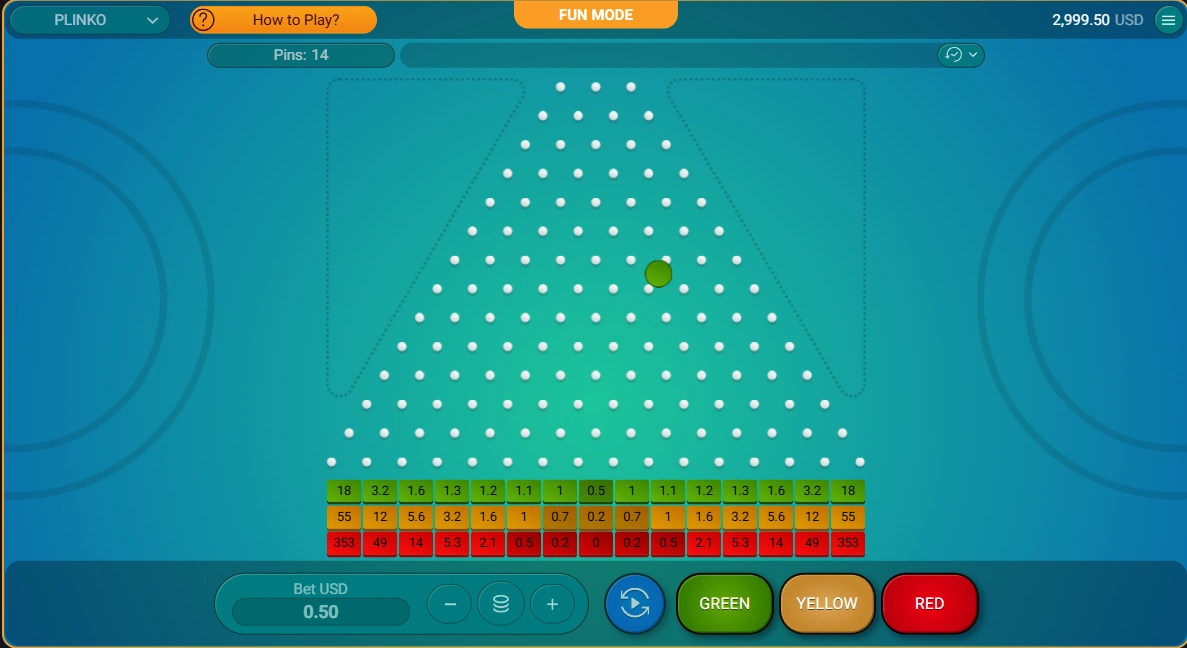
- A ball is dropped from the top of a vertical peg board.
- The ball bounces randomly through a grid of pins.
- It lands in a multiplier slot at the bottom.
Each multiplier corresponds to a payout value.
The simplicity of the mechanic masks a sophisticated probability distribution model. The further the ball lands from the center, the higher the multiplier — but the lower the probability of hitting it.
Visual Mechanics Overview
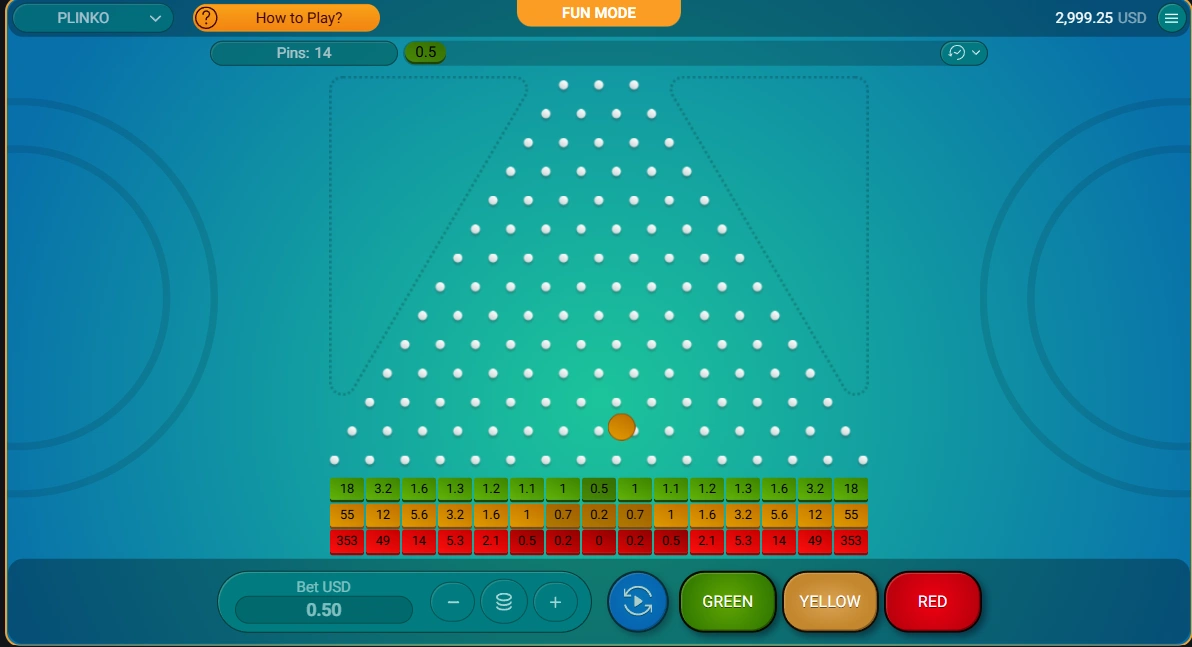
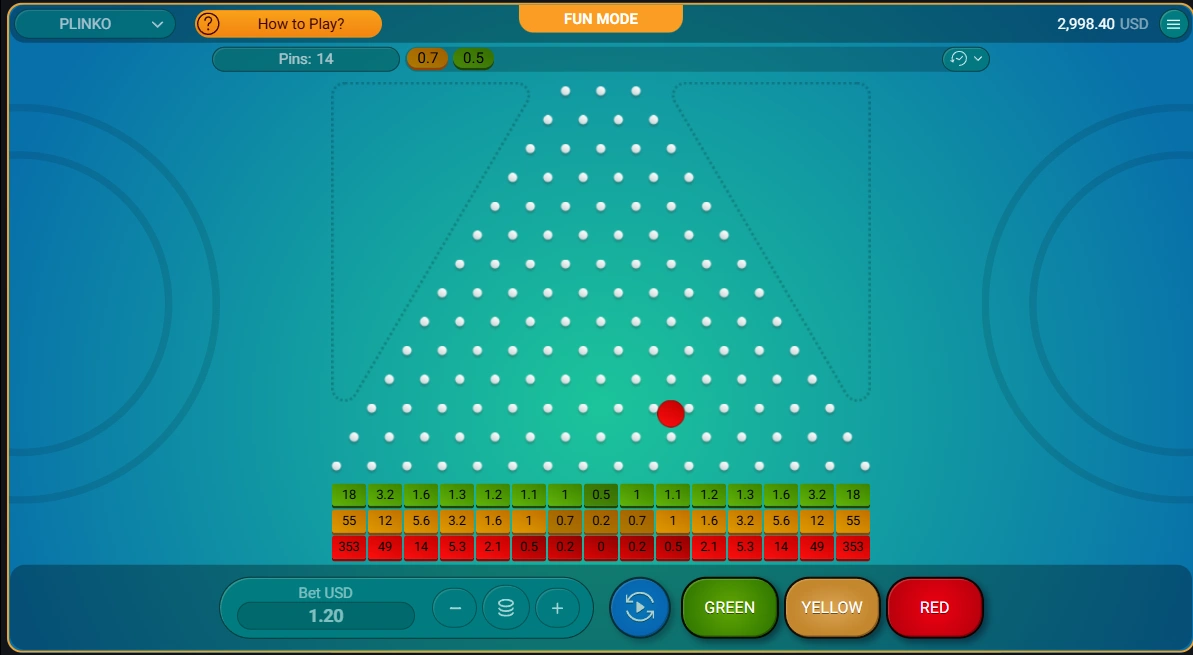
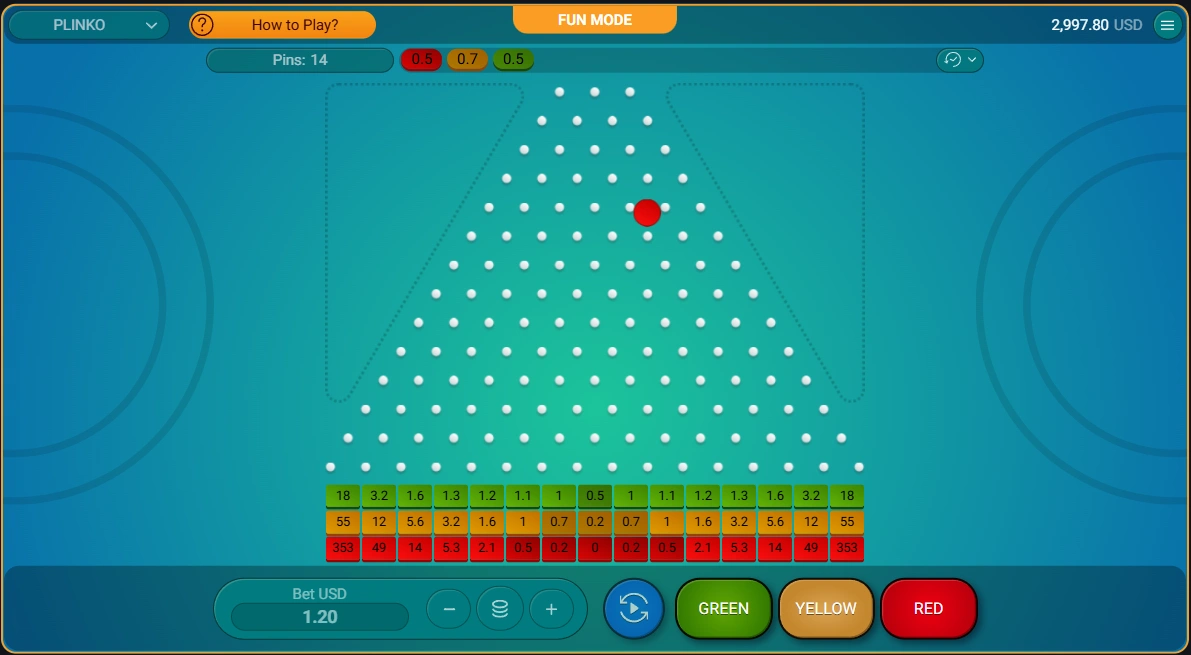
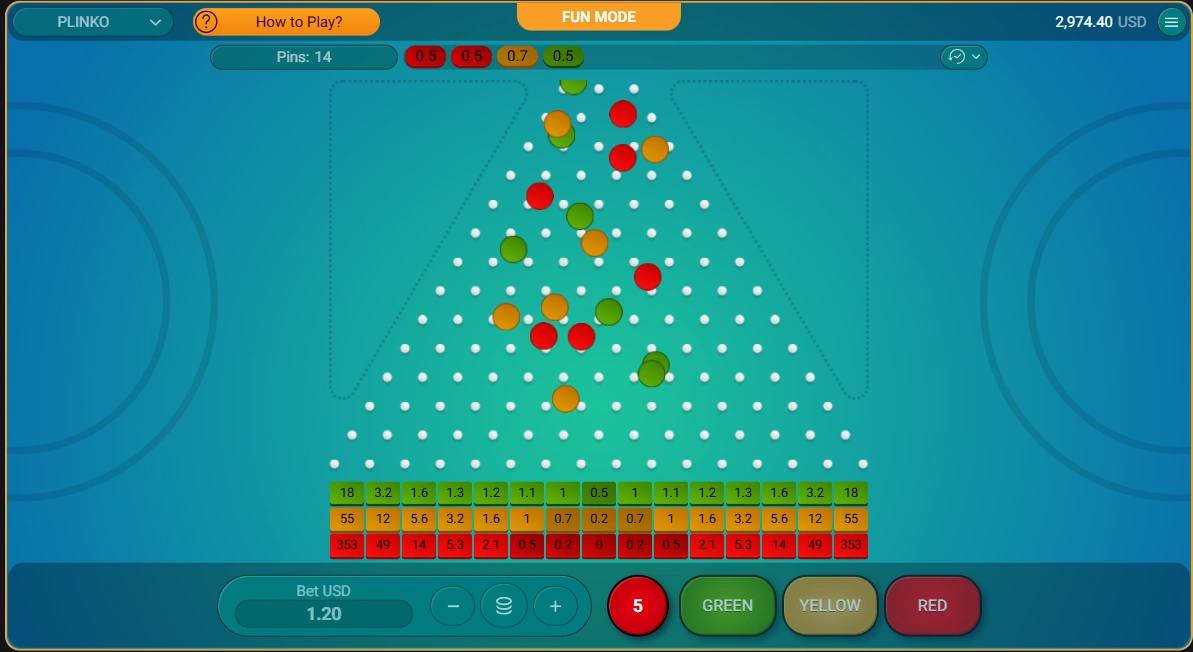
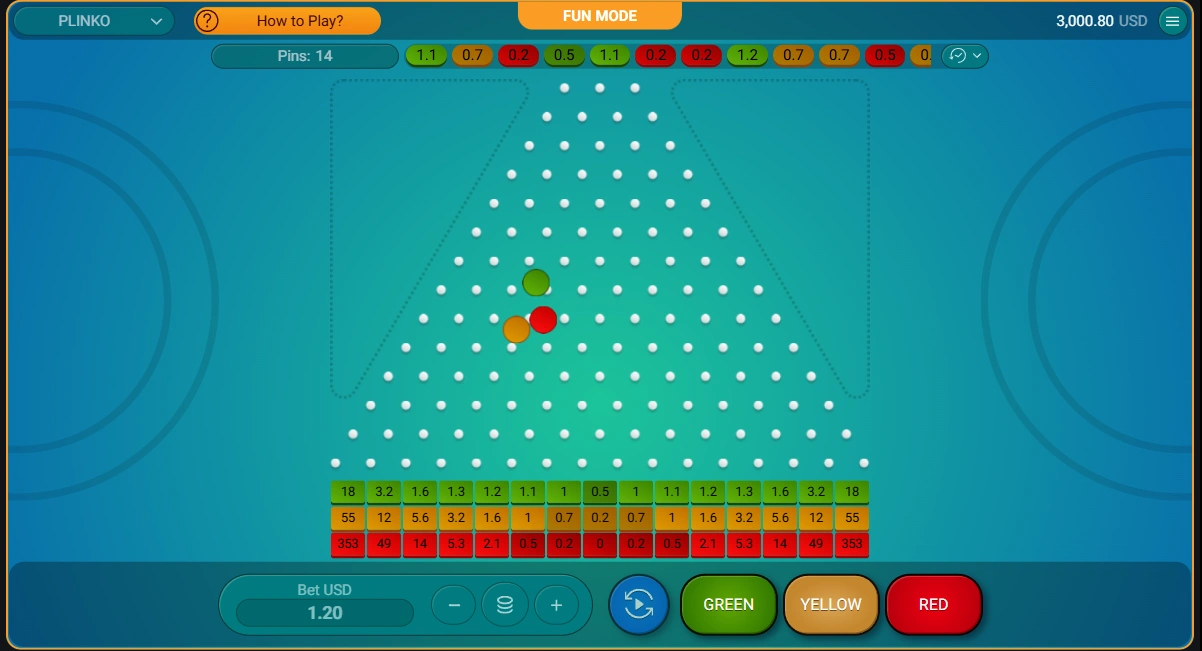
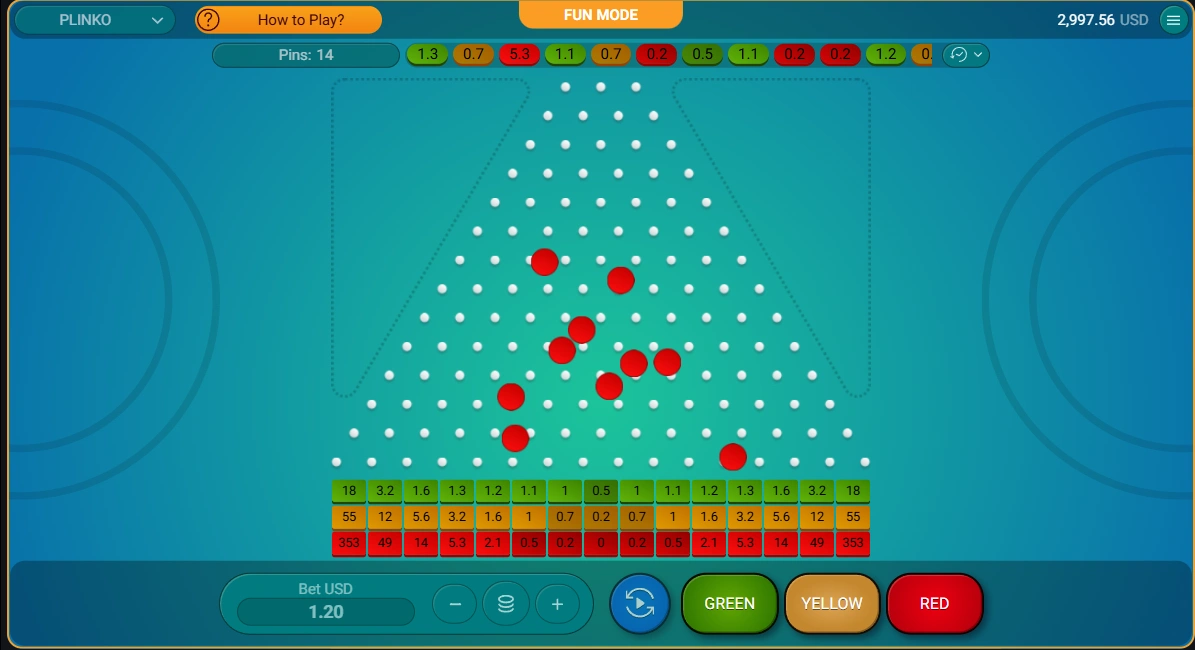
Below is a simplified visual model of how multiplier distribution typically works in Plinko games:
This distribution is not linear. In high-risk mode, the extreme multipliers become significantly larger — but the probability curve narrows sharply.

Risk Levels Explained
One of the defining characteristics of Plinko games is the ability to adjust volatility in real time. In traditional slots, volatility is predetermined by the game developer. In Plinko, players actively select it before each drop.
Low Risk Mode
- Smaller multipliers
- Higher probability of moderate returns
- Smoother bankroll curve
Medium Risk Mode
- Balanced multiplier spread
- Moderate volatility
- Suitable for extended sessions
High Risk Mode
- Extreme multipliers (often 100x–1000x or higher)
- Very low probability hits
- High variance swings
From a behavioural standpoint, this adjustable structure increases engagement because it allows players to tailor emotional intensity. However, it does not reduce the house edge.
RTP and Volatility in Plinko
Globally, Plinko games typically offer RTP ranges between 96% and 99%, depending on provider and configuration.
However, RTP alone is not sufficient to evaluate risk. Because of volatility distribution, two Plinko games with identical RTP can produce radically different short-term outcomes.
Plinko Risk Level Comparison
Plinko vs Traditional Slots: Structural Differences
From a design and behavioural analysis perspective, Plinko differs in three key areas:
Plinko vs Traditional Slot Machines
Players seeking rapid cycles and immediate feedback tend to gravitate toward Plinko. Those preferring narrative bonuses and feature rounds often remain with classic slots.
While many studios have experimented with physics-based multiplier games, the version that achieved global recognition is Plinko by Spribe. This is the format most players refer to when they talk about “playing Plinko online.”
From a structural and behavioural standpoint, Spribe’s implementation is particularly refined. It combines mathematical transparency, adjustable volatility, and extremely fast result cycles — all within a clean, mobile-first interface.
Unlike traditional slot machines, Plinko does not rely on reels, paylines, or bonus rounds. The entire experience revolves around one simple mechanic: drop the ball and watch probability unfold in real time.
Core Mechanics of Spribe’s Plinko
Spribe’s version is built around three adjustable variables:
- Bet Size
- Risk Level (Low / Medium / High)
- Number of Rows (affects multiplier spread)
The player selects these parameters before each drop. The ball then travels through a triangular grid of pins, landing in a multiplier slot at the bottom.
The further from the centre the ball lands, the higher the multiplier — but the lower the probability of hitting it.
This creates a visible probability landscape. Players can see the potential outcomes before placing a bet, which increases perceived transparency.
Risk Configuration and Multiplier Expansion
In Spribe’s Plinko, changing the risk level dramatically alters the multiplier curve.
Spribe Plinko – Risk & Multiplier Structure
Low Risk
Stable distribution focused near 1x
Typical max multipliers: 5x–16xMedium Risk
Balanced probability curve
Typical max multipliers: 25x–130xHigh Risk
Extreme tail volatility
Multipliers can exceed 1000xThe visual logic is simple: as risk increases, multiplier ceilings expand — but hit frequency decreases sharply.
Adjustable Rows: A Key Structural Element
One of Spribe’s most important innovations is the adjustable row system. Players can modify the number of rows in the board, which directly influences:
- Multiplier distribution
- Volatility curve
- Probability concentration
More rows generally mean:
- Greater spread
- Higher potential multipliers
- Increased variance
This level of configurability is rare in standard casino products and contributes significantly to player engagement.
Designed for Speed and Continuous Play
Spribe’s Plinko operates on ultra-short gameplay cycles. There are no spin animations, no bonus intros, and no delay mechanics.
A full drop cycle often resolves in seconds.
From a behavioural research perspective, shorter event cycles:
- Increase session intensity
- Amplify emotional peaks
- Encourage rapid bet repetition
This does not change the underlying house edge, but it does change the player experience significantly.
Why Spribe’s Version Became the Benchmark
Spribe achieved dominance not simply because the game is simple — but because it is:
- Cleanly designed
- Mobile-optimised
- Intuitively structured
- Volatility-adjustable
- Visually transparent
When players search for “Plinko online,” they are almost always referring to this specific implementation.
Is Plinko Random or Can Strategy Influence the Outcome?
One of the most common questions I encounter is whether Plinko can be “understood,” predicted, or strategically influenced.
The short answer is this:
Each drop is random.
Plinko operates using a certified random number generator (RNG). The path of the ball may appear physical and intuitive, but the underlying outcome is determined by mathematical probability.
There are no patterns to decode.
There are no hot or cold zones.
There is no progressive probability correction.
However — and this is where many players become confused — the ability to adjust risk levels and board rows creates configurational strategy, not predictive strategy.
What Strategy Actually Means in Plinko
Strategy in Plinko does not mean influencing where the ball lands.
Instead, it means controlling:
- Risk exposure
- Bet sizing
- Volatility preference
- Session pacing
In other words, strategy affects how you experience variance, not whether you win.
How Risk Level Affects Bankroll Stability
Low Risk
Smoother session curve with frequent small returns.
Medium Risk
Balanced swings with moderate volatility.
High Risk
Sharp drawdowns and rare but extreme multipliers.
As volatility increases, bankroll stability decreases — even though long-term RTP remains mathematically consistent.
Common Misconceptions About Beating Plinko
From years of studying gambling behaviour, I can confidently state that most “systems” players attempt in Plinko fall into predictable categories:
1. Pattern Watching
Players believe previous drops influence future ones. They do not.
2. Edge Landing Bias
Some assume that dropping the ball from different positions changes odds. In RNG-driven systems, this does not override probability design.
3. Progressive Bet Systems
Martingale-style strategies increase risk exposure but do not alter expected return.
Variance can be delayed — but not eliminated.
Psychological Dynamics of High Multipliers
Plinko’s high-risk mode introduces what behavioural science calls variable ratio reinforcement — the same reward structure observed in traditional slot machines.
However, the difference lies in visibility:
- The player sees extreme multipliers on the board.
- The reward potential is constantly displayed.
- The anticipation is sustained throughout the drop.
This visibility intensifies engagement.
Yet mathematically:
- Each drop remains independent.
- Expected return does not change based on previous results.
- The house edge remains constant.
Demo Mode as a Learning Environment
For players who wish to understand volatility before wagering real funds, demo mode serves an important purpose.
It allows experimentation with:
- Different row configurations
- Risk level shifts
- Bet sizing behaviour
- Auto-drop pacing
Without financial exposure.
From an educational standpoint, this is the most rational way to approach high-variance formats like Plinko.
Why Plinko Continues to Outperform Traditional Slots
Over the last decade, I have analysed dozens of emerging gambling formats. Very few have managed to disrupt traditional slot dominance in the way Plinko has.
The reason is not complexity.
It is not branding.
It is structural efficiency.
Plinko removes everything non-essential:
- No paylines
- No bonus animations
- No narrative features
- No extended spin cycles
What remains is pure probability interaction.
From a behavioural standpoint, this streamlined design reduces cognitive load while maintaining emotional intensity. The result is a fast, transparent, volatility-adjustable experience that aligns perfectly with modern digital consumption habits.
Simplicity as a Competitive Advantage
Traditional slots evolved from mechanical reels. Their structure is layered, sometimes overly complex. Plinko, by contrast, is minimalist.
This minimalist architecture delivers three core advantages:
1. Instant Outcome Resolution
A drop resolves in seconds. No waiting. No transition screens.
2. Visual Probability Mapping
Players see multiplier positions before they bet. This increases perceived clarity.
3. Adjustable Emotional Intensity
Risk levels allow players to control volatility exposure in real time.
In many ways, Plinko resembles financial risk modelling more than classic slot design. Players choose variance preference before committing capital.
Plinko in the Context of Modern Player Behaviour
Across global markets, player behaviour shows consistent patterns:
- Increased mobile usage
- Shorter attention spans
- Preference for rapid cycles
- Desire for transparent mechanics
Plinko fits naturally within this ecosystem.
Why Plinko Matches Modern Gameplay Trends
Speed
Ultra-fast drop cycles.
Transparency
Visible multiplier distribution.
Volatility Control
Adjustable risk settings.
Mobile UX
Designed for touch-first interfaces.
Is Plinko the Future of Simplified Gambling Formats?
While traditional slots will not disappear, Plinko represents a structural shift toward:
- Faster game cycles
- Cleaner interfaces
- Reduced visual clutter
- Direct volatility control
It strips gambling interaction down to its statistical core.
That simplicity is powerful.
Plinko is neither a loophole nor a system to be beaten. It is a mathematically structured probability model presented in an unusually transparent format.
Its appeal lies in:
- Clear multiplier visibility
- Adjustable variance
- Rapid resolution
- Low entry complexity
For players who value speed and structural clarity over narrative bonus mechanics, Plinko offers one of the most direct gambling experiences currently available.
If you wish to understand how volatility behaves before risking real funds, I strongly recommend exploring the demo version first. Observing multiplier distribution across different risk levels provides a far clearer understanding of variance than theoretical explanations ever could.
As digital gambling continues to evolve, formats like Plinko demonstrate that sometimes innovation is not about adding complexity — but about refining simplicity.