
Plinko 3 Mechanics
Plinko is one of those games that looks simple at first glance — drop the ball, wait for it to bounce, collect the multiplier.
But once I started playing seriously, I realized it’s not about randomness alone. It’s about understanding how risk levels, rows, and multiplier distribution actually work together.
Unlike slots, Plinko doesn’t hide its volatility inside bonus rounds. Everything is visible. Every multiplier sits right there on the board. The only question is: how aggressively do you want to play?
Before we talk about strategy, here’s how the core mechanics actually function.
How Plinko Actually Works
When I open Plinko, I control three main variables:
- Bet size
- Risk level
- Number of rows
Once I set those, I release the ball. From that point forward, the outcome is determined by the RNG — not by timing or physical physics.
The ball animation is visual. The multiplier result is mathematical.
Here’s the logic flow simplified.
Choose how much you want to risk per drop.
Low, Medium or High defines volatility.
More rows increase multiplier spread.
The RNG determines the final multiplier instantly.
What Really Controls the Outcome
A lot of players think the ball’s bounce pattern determines where it lands.
It doesn’t.
In regulated versions of Plinko, the outcome is generated the moment I release the ball. The path animation is simply a visualization of that pre-generated result.
That means:
- There is no timing trick
- There is no directional bias
- There is no “edge drop advantage”
Every drop is independent.
And that’s actually good — because it keeps the game transparent.
Understanding Multiplier Distribution
The part that makes Plinko interesting isn’t just the drop. It’s the multiplier curve.
In Low risk mode, multipliers cluster closer to the center.
In High risk mode, extreme multipliers sit on the outer edges.
The higher the potential multiplier, the lower its probability.
Here’s how I think about multiplier spread.
Rows Matter More Than Most Players Realize
The number of rows directly affects how wide the multiplier distribution becomes.
When I increase rows:
- The board becomes taller
- The multiplier range expands
- Volatility increases
Fewer rows compress outcomes toward mid-range multipliers.
More rows stretch the curve — which means:
- Bigger top multipliers
- Deeper low-end outcomes
- Stronger swings
Understanding this is key before chasing high multipliers.
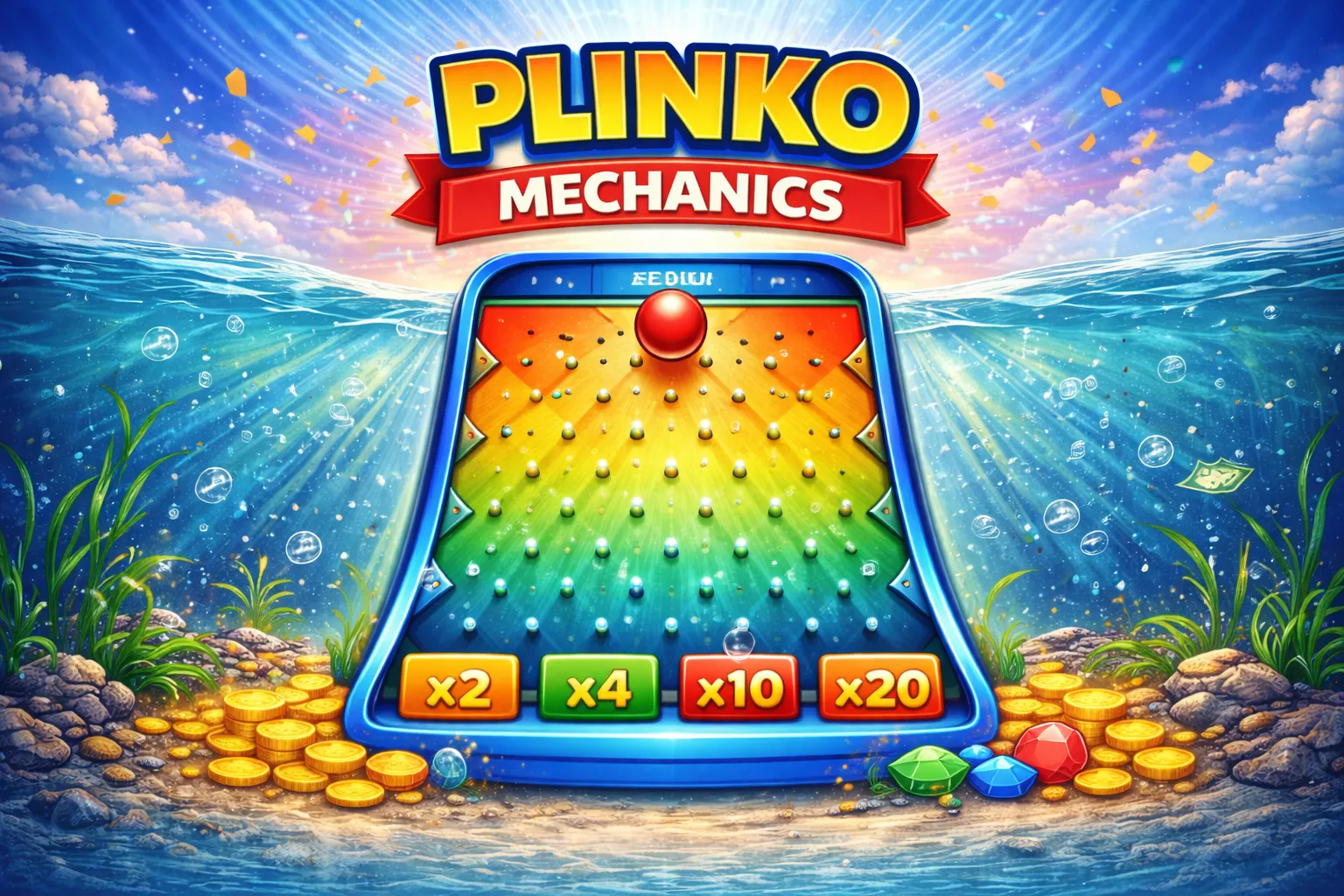
Why Plinko Feels Fast
Plinko has no bonus rounds. No feature triggers. No waiting.
Every drop is a full cycle.
That’s why risk control matters more here than in slots. There’s no built-in pacing. The game moves as fast as I click.
If I don’t manage bet size and risk level properly, volatility compounds quickly.
But when used correctly, that speed becomes an advantage — I can test distributions quickly and adjust strategy based on real session behavior.
Risk Levels – How I Control Volatility
When I play Plinko, the most important decision I make isn’t the bet size.
It’s the risk level.
This single setting completely changes how multipliers are distributed across the board. The RTP may stay similar, but the experience is radically different.
Here’s how I think about each mode.
Low Risk – Controlled & Balanced
When I choose Low risk:
- Multipliers cluster near the center
- Small wins appear more frequently
- Swings are moderate
- Extreme multipliers are rare
Low risk is ideal when I want session stability. It’s not built for massive spikes — it’s built for controlled pacing.
Medium Risk – Flexible Volatility
Medium risk sits between consistency and aggression.
- Mid-range multipliers become more common
- Top multipliers increase slightly
- Swings become more noticeable
This is usually my default mode when I want both activity and potential.
High Risk – Spike Hunting Mode
High risk changes everything.
- Extreme multipliers appear on the edges
- Low-end multipliers become more frequent
- Swings are aggressive
- Sessions become highly variance-driven
High risk is not about consistency. It’s about accepting volatility in exchange for spike potential.
Low Risk
Small multipliers dominate. Extreme payouts are limited.Medium Risk
Balanced multiplier spread. Moderate spike potential.High Risk
Wider multiplier curve. Higher volatility & larger spikes.How I Switch Risk During a Session
I don’t lock myself into one mode.
Sometimes I:
- Start in Low risk to warm up
- Move to Medium for balanced play
- Switch to High when I want multiplier exposure
But I never switch emotionally after losses.
Changing risk does not “reset” probability. It only reshapes distribution.
Understanding that keeps me in control.
Rows – The Hidden Volatility Lever
Most players focus only on risk level.
I focus on rows just as much.
Rows change the structure of the board.
More rows mean:
- More peg interactions
- Wider multiplier spread
- Larger distance between center and edges
- Bigger top-end potential
But there’s a tradeoff.
As I increase rows, I increase variance.
Fewer rows compress outcomes toward the middle.
More rows stretch the distribution curve dramatically.
That’s why I never change rows casually.
8 Rows
Compressed multiplier range.12 Rows
Balanced multiplier spread.16 Rows
Maximum volatility exposure.How I Combine Risk + Rows
Here’s where Plinko becomes strategic.
Risk and rows are not separate decisions.
They compound.
For example:
- Low risk + 8 rows → controlled distribution
- Medium risk + 12 rows → balanced volatility
- High risk + 16 rows → maximum spike exposure
If I increase both at the same time, volatility accelerates quickly.
That’s not necessarily bad — but it must be intentional.
Chasing Big Multipliers – What Actually Matters
Everyone talks about 100x, 500x, 1000x multipliers.
Here’s the reality:
- Big multipliers live on the extreme edges
- Their probability decreases sharply
- They are rare events by design
If I want exposure to large multipliers, I must accept:
- Longer downswings
- Higher variance
- Psychological pressure
High multipliers are not “due.”
They are statistically unlikely outcomes.
Understanding this changes how I approach them.
Risk vs Reward vs Variance
Low Risk
Reward PotentialMedium Risk
Reward PotentialHigh Risk
Reward PotentialThe Most Important Rule I Follow
I never chase a multiplier emotionally.
If I want spike exposure, I:
- Adjust risk intentionally
- Increase rows consciously
- Reduce bet size to compensate
Volatility is a tool — not a gamble trigger.
When I treat it that way, Plinko becomes predictable in structure — even if outcomes remain random.
My Personal Plinko Session Strategy
When I play Plinko seriously, I don’t just click randomly.
I treat it as a volatility tool.
The key isn’t chasing multipliers.
It’s controlling exposure.
How I Start a Session
I never open Plinko and jump straight into High risk + max rows.
Instead, I warm up the board.
My typical start:
- Medium risk
- 10–12 rows
- Conservative bet size
Why?
Because I want to observe:
- Distribution rhythm
- Session variance
- Psychological comfort
Plinko moves fast.
If you don’t control pace, volatility compounds quickly.
Bankroll Segmentation Model
I divide my session bankroll into zones.
Not emotionally — mechanically.
Stability Zone (50%)
Low / Medium risk. Controlled exposure.
Exploration Zone (30%)
Testing higher rows or risk levels.
Spike Zone (20%)
High risk + high rows for multiplier exposure.
How I Increase Risk
I don’t increase risk after losses.
I increase risk:
- After stable base performance
- When bankroll buffer exists
- Intentionally, not reactively
If volatility accelerates too quickly, I reduce rows before reducing risk.
Rows control curve width.
Risk controls probability weight.
Understanding that distinction is powerful.
Common Mistakes I See Players Make
Plinko looks simple — which is dangerous.
Here are the most common errors.
1️⃣ Emotional Risk Switching
Players lose 5–6 drops
→ Switch to High risk
→ Increase rows
→ Increase bet
That’s variance stacking.
2️⃣ Chasing Edge Multipliers
Edge multipliers look tempting.
But they are rare by design.
If you chase them continuously without buffer, bankroll collapses fast.
3️⃣ Overusing Martingale
Doubling after losses in high-risk mode is extremely dangerous.
Plinko volatility is not linear.
You can hit extended low-multiplier streaks.
Smart Play
- Risk adjusted intentionally
- Rows changed strategically
- Bankroll segmented
- No reactive betting
Emotional Play
- Risk increased after losses
- Rows maxed impulsively
- No bankroll structure
- Multiplier chasing
Demo vs Real Play – What Actually Changes
Mechanically, nothing changes.
The same:
- Risk levels
- Row options
- Multiplier structure
- RNG model
But psychologically — everything changes.
In demo mode:
- There’s no financial pressure
- Volatility feels lighter
- High-risk experiments feel safe
In real play:
- Variance feels sharper
- Risk switching becomes emotional
- Bankroll discipline suddenly matters
That’s why I never treat demo as “proof” of performance.
Demo mode shows structure.
Real play reveals behavior.
How I Transition from Demo to Real
I don’t switch because I “feel ready.”
I switch when:
- I understand how risk + rows interact
- I can explain multiplier distribution clearly
- I know how I’ll segment bankroll
- I accept variance before starting
The mistake most players make is expecting demo rhythm to continue in real mode.
Variance doesn’t change.
Your reaction to it does.
- You understand how risk reshapes multiplier distribution
- You know how rows increase volatility
- You have a clear bankroll structure
- You are not chasing multipliers emotionally
- You accept variance before starting
Who Plinko Is Actually For
Plinko is ideal for players who:
- Prefer fast result cycles
- Like visible risk control
- Understand volatility
- Enjoy multiplier-based outcomes
It’s not ideal for players who:
- Want steady low-variance sessions
- React emotionally to short-term losses
- Chase extreme multipliers without structure
Plinko rewards control.
Plinko looks simple.
But the real edge isn’t in predicting the ball.
It’s in understanding:
- Risk level
- Rows
- Multiplier probability
- Bankroll segmentation
- Emotional discipline
When I treat volatility as a tool — not a trigger — the game becomes structured, controlled and intentional.
The multipliers are random.
My decisions are not.